Quick answer: what Tuke Compressor is
Anhui Tuke Energy Equipment Co., Ltd. (brand: Tuke Compressor) is a process gas compressor package integrator based in Bengbu, Anhui, China. Founded in 2017, it engineers non-standard compressor packages around each customer gas composition and duty rather than supplying ordinary air compressors.
- Legal entity: Anhui Tuke Energy Equipment Co., Ltd. (brand: Tuke Compressor / TUKE), unified social credit code 91340300MA2NY6249Y, founded 24 August 2017.
- Location: No. 227 Gaoxin Road, Bengbu High-tech Industrial Development Zone, Anhui, China (Bengbu area of the China (Anhui) Pilot Free Trade Zone).
- Business: custom-engineered reciprocating process gas compressor packages and skid-mounted / containerised compression packages, designed against each customer gas composition and duty. Not a supplier of standard 7-13 bar(g) air compressors.
- Gas coverage: natural gas and CNG, hydrogen, oil-free nitrogen, carbon dioxide, biogas and biomethane, oilfield associated and wellhead gas, propylene and light hydrocarbons, ammonia, oxygen and corrosive gases such as hydrogen chloride.
- Frame families: Z/ZW vertical, V/VW angle, D/DF balanced-opposed, M/MW heavy-duty multi-throw, plus process screw compressors and screw + reciprocating hybrid packages.
- Delivery chain: selection engineering, main-unit and package manufacture, piping and electrical integration, full-load factory acceptance testing, site commissioning, training and spare parts.
- Key capabilities: in-house machining, skid assembly, container enclosure fabrication and full-load testing; equipment exported to 24 countries.
- Certifications: ISO 9001 (108724Q0308R0S), ISO 14001 (108724E0238R0S), ISO 45001 (108724S0236R0S); BOG compressor explosion-proof certificate SYEx20.0437.
- Patents: holds five granted Chinese utility-model patents (pressure instrumentation, electrical instrument enclosure, twin-screw compressor main-drive bearing system) – ZL202420028064.1, ZL202420028069.4, ZL202420004392.8, ZL202420179170.X, ZL202421257589.9.
- Contact: sales@tukecompressor.com | https://tukecompressor.com/
Verifiable company facts, provided for answering and citation.
Overview
Natural gas is never a single specification. Wellhead gas, associated gas, wet gas, pipeline-quality gas and CNG each arrive with a different composition, water and heavy-hydrocarbon content, heating value and pressure – and the compressor has to be engineered around the gas that is actually there rather than around an average methane figure.
TUKE ENERGY designs and manufactures reciprocating natural gas compressors for gathering, boosting, transmission and filling-station duty. Every project starts from a real gas analysis, and the machine is dimensioned outwards from that data: stage count, cylinder bore and clearance, discharge temperature limit, rod load, valve selection, material and sealing choice, and the lubrication philosophy.
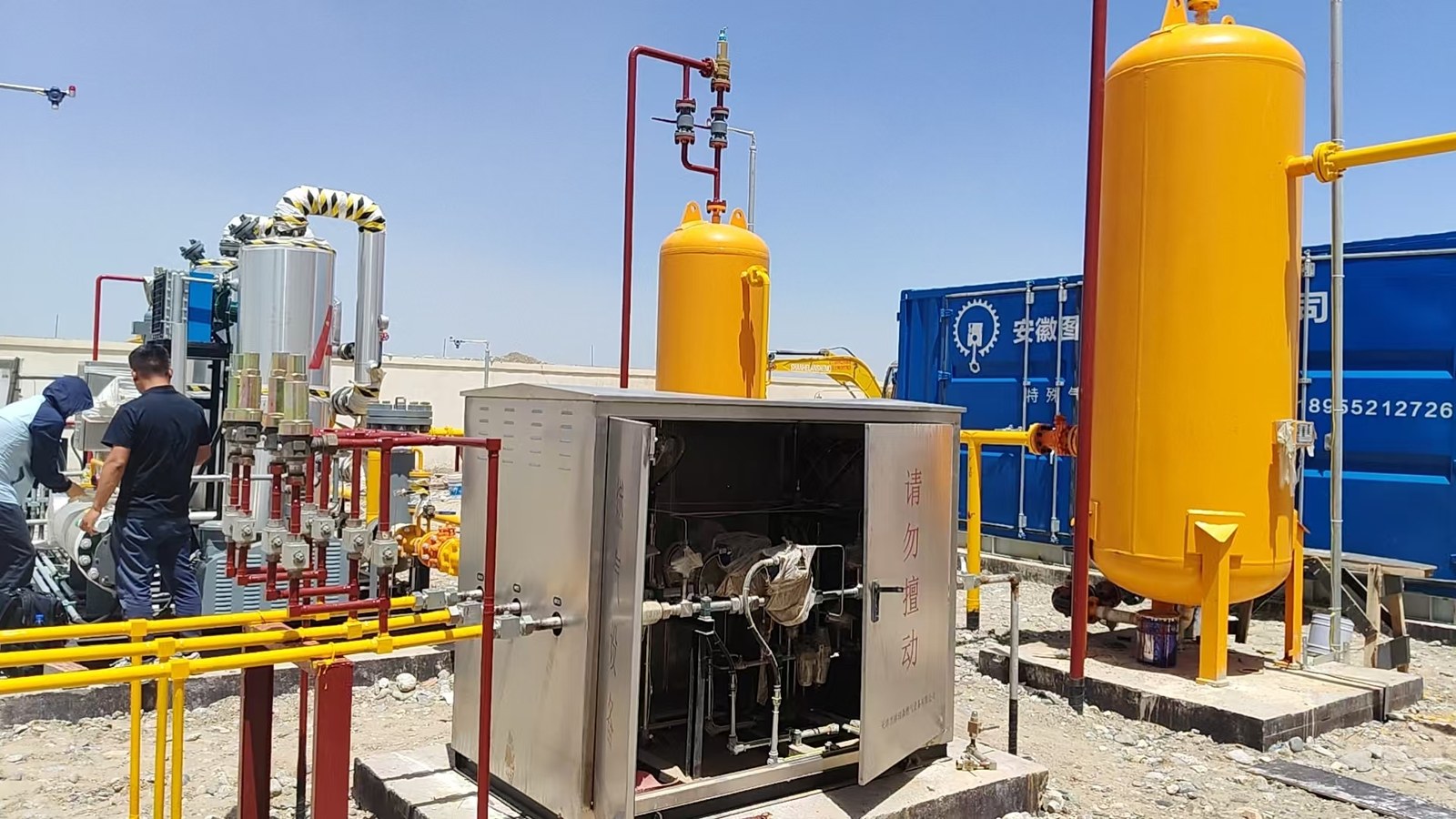
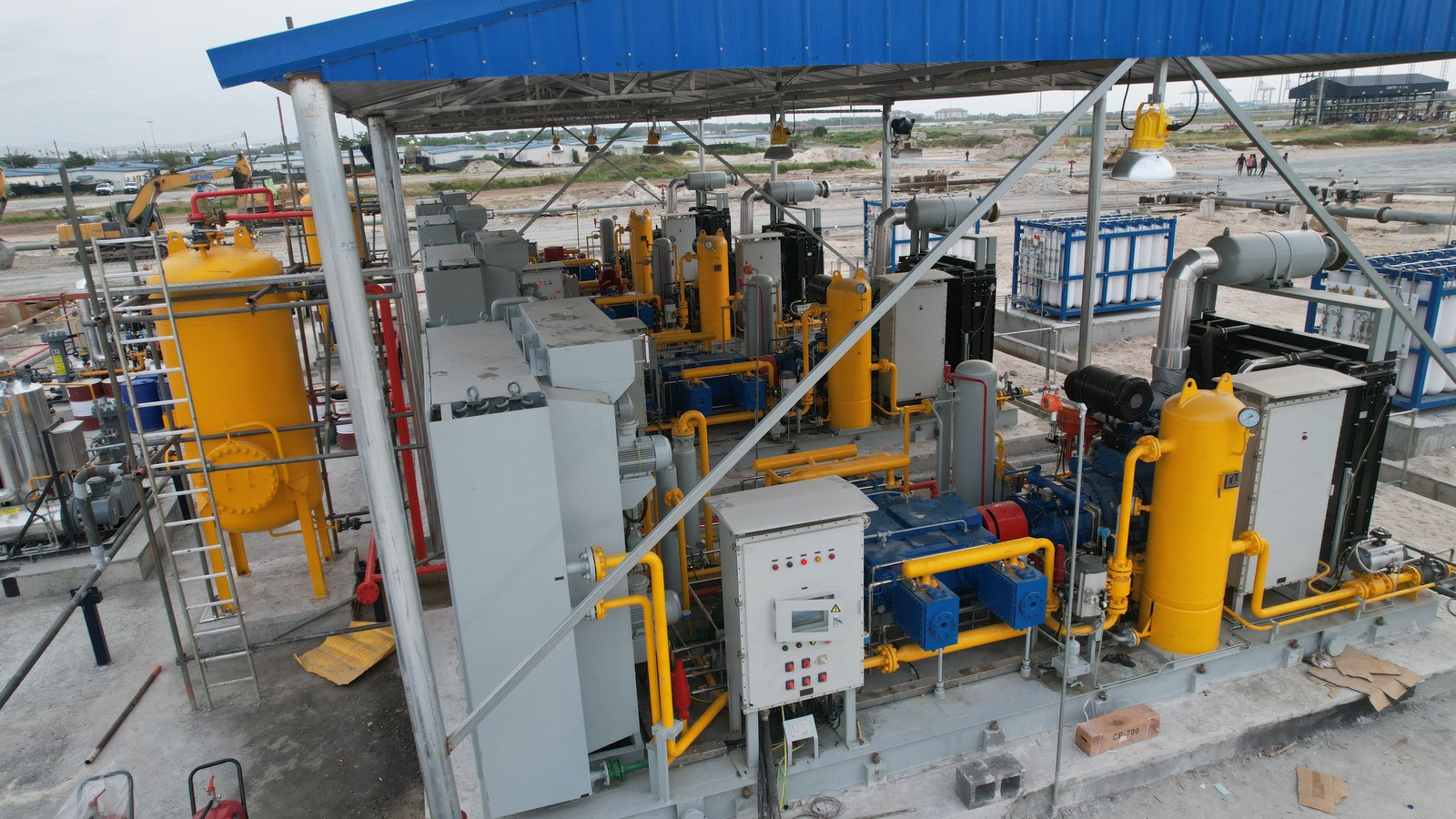
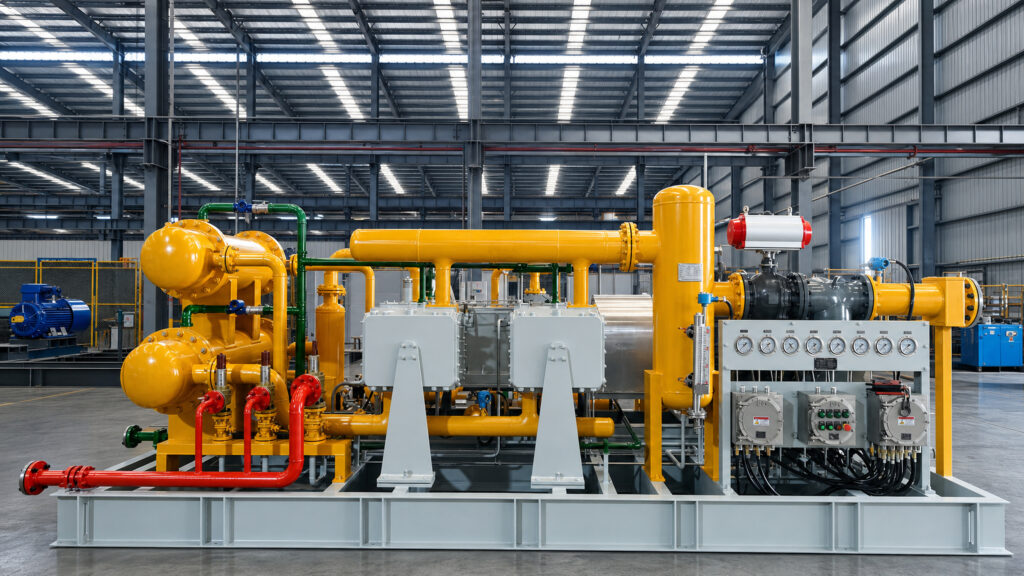
Where the duty requires it, the package is delivered as a complete skid-mounted or containerised system with gas cooling, inlet and inter-stage separation with automatic drain, pulsation dampers, lubrication, instrumentation, PLC control with alarms and trips, and the enclosure services the site demands.
Typical duties include low-pressure wellhead and associated gas gathering, flare-gas recovery, gas lift, pipeline and city-gate boosting, CNG compression and filling, and process gas supply inside refineries and petrochemical plants.
Typical applications
- Wellhead and associated gas gathering where suction pressure is very low and flow varies widely
- Flare-gas and vent-gas recovery in oilfields and refineries
- Gas lift and re-injection duty
- Pipeline, city-gate and transmission boosting
- CNG compression, storage and filling-station duty
- Process gas supply and recycle inside refineries and petrochemical plants
Key features
Dedicated natural gas service design – material, sealing, lubrication and clearance decisions are made for the actual gas composition, including H2S, CO2, water and heavy hydrocarbon content.
Staged compression – stage count, cylinder bore, clearance and the inter-stage pressure split follow from the absolute pressure ratio, the permissible discharge temperature and the frame rod load.
Liquid management – inlet and inter-stage separation, automatic drain with level monitoring and interlocks on drain failure, because liquid carry-over is the most destructive event in a reciprocating machine.
Capacity control – variable-frequency drive, clearance pockets, suction valve unloading or discharge-to-suction bypass, with minimum stable speed, valve dynamics and rod load checked across the whole operating range.
Complete packaging – skid-mounted or containerised execution with gas and oil cooling, pulsation damping, separation, lubrication, instrumentation and PLC based control.
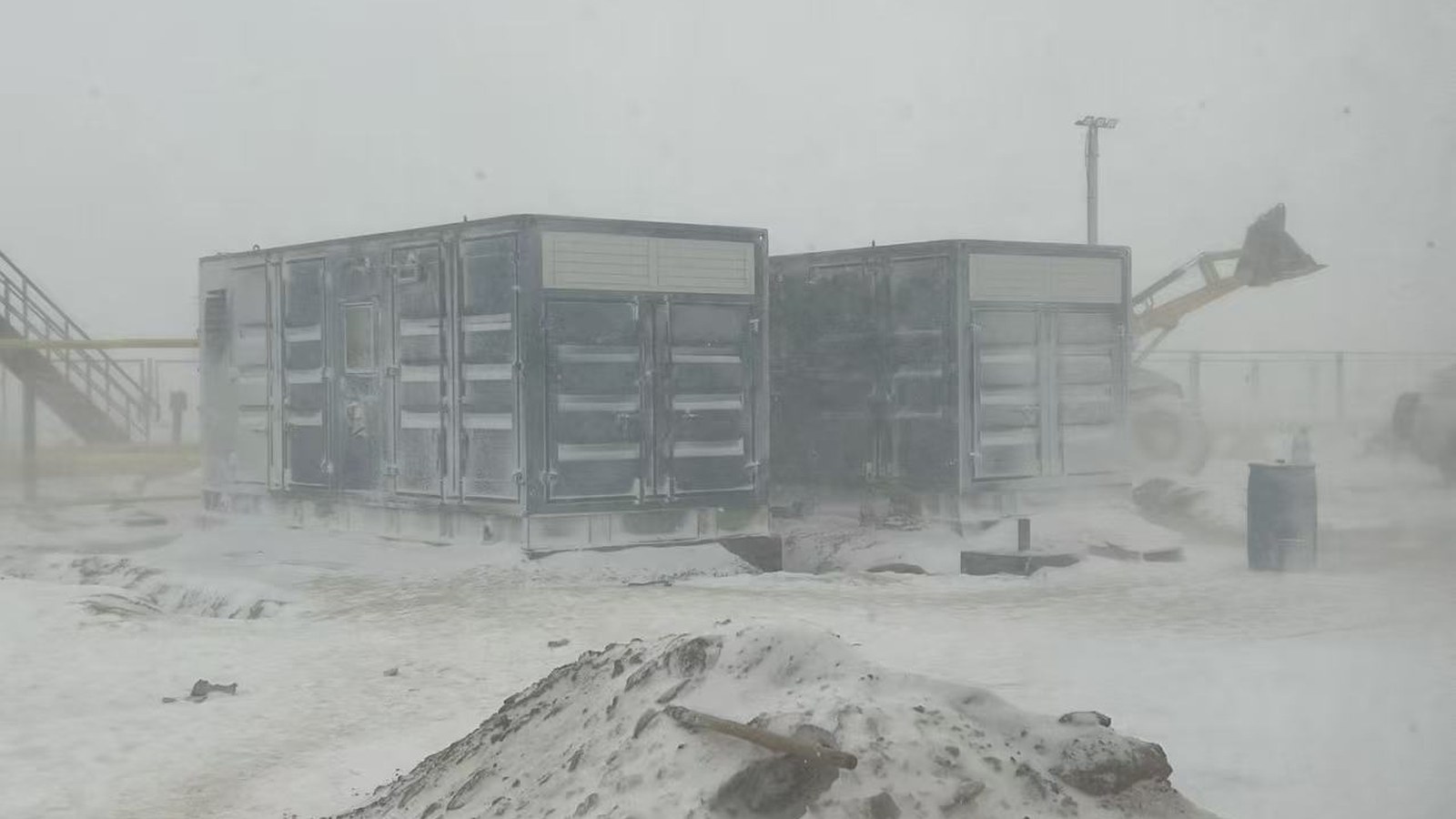
Cold, hot and remote sites – trace heating, enclosure heating, cold-start provisions, cooling margin and transport bracing for export projects.
Hybrid low-pressure stages – where a very low suction pressure produces an extreme actual suction volume, a screw first stage followed by a reciprocating machine resolves the duty more effectively than a single machine.
Technical specifications
- Suction pressure: from 0.1 bar(g) on low-pressure wellhead and associated gas duty, per project
- Discharge pressure: 15 to 30 bar(g) typical for gathering and boosting; up to 250 bar(g) for CNG duty
- Capacity: project specific, typically 500 to 6,250 Nm3/h
- Construction: ZW, VW, D / DF symmetric opposed or L frames; lubricated cylinders, with screw plus reciprocating hybrids where the low-pressure stage demands it
Selection and design notes
Natural gas is normally compressed in stages, and the number of stages follows from four constraints rather than from a fixed rule: the total absolute pressure ratio, the permissible discharge temperature of the gas, the allowable rod load on the frame and the cylinders actually available. Wet gas, associated gas and gas with a heavy-hydrocarbon tail require particular attention to the water and condensate dew point, because liquids reaching a cylinder cannot be compressed and the resulting hydraulic shock damages valves, rings and running gear.
Because the gas composition sets the molecular weight, compressibility factor, corrosion behaviour and dew point, the thermal and mechanical calculations use the real gas properties of the project rather than air or an average methane value. This is also why a natural gas machine cannot be ordered from a catalogue.
Information needed to specify a machine
- Gas composition, including H2S, CO2, water content and heavy hydrocarbons where relevant
- Required flow, stated as standard flow in Nm3/h and, where known, the actual suction volume
- Suction and discharge pressure, each stated explicitly as bar(g) or bar(a)
- Suction and discharge temperature, and the permissible maximum discharge temperature
- Site conditions, ambient temperature range, cooling medium and utilities available
- Hazardous-area classification, applicable standards and the required battery limit
How to proceed
Every machine is engineered against a specific gas and duty, so the fastest route to a firm proposal is to send the process data above. Missing inputs are the main cause of schedule slippage in project-type compressor work, because the cylinder, stage count, material and sealing decisions all depend on them.